

2025 was a year of stability for the Italian steel value chain, bringing an end to the downward trend seen in recent years. Despite a decline in activity levels, the sector managed to maintain its main indicators at the previous year's levels. However, its current position remains well below that recorded at the beginning of the three-year period and cannot yet be considered satisfactory.
Net profit rose by 12.6% and value added increased by 0.83%. Turnover declined by 3.8%, while EBITDA fell by 1.8%.
 These are the findings of Bilanci d’Acciaio 2026, siderweb’s study providing a strategic and forward-looking analysis of the steel value chain’s economic and financial performance, based on the examination and interpretation of financial statements for the 2023–2025 period.
Now in its 18th edition, the study is produced by the siderweb Research Department in collaboration with Professors Claudio Teodori and Cristian Carini of the University of Brescia, and sponsored by BPER Banca, Regesta Group and Coface. The analysis covers the financial statements of approximately 1,700 companies operating in steel production, primary processing, service centres and distribution, and is complemented by a survey focusing on 2026 performance and the short-term outlook.
“We use steel in every aspect of our daily lives, and the Italian steel value chain is a driving force behind the country's industry. In such a complex environment, companies across the steel sector need to rediscover value. The sector's EBITDA margin, at around 7%, highlights the need to develop synergies throughout the value chain, innovate products and processes, and embrace new, open approaches across the industry, drawing on creativity and the distinctive Made in Italy style: the true raw materials of the Italian people,” said Paolo Morandi, CEO of siderweb.
THE PERFORMANCE OF THE ITALIAN STEEL INDUSTRY
Over the three-year period analysed (2023–2025), turnover recorded an average annual decline of 6.3%, accompanied by a deterioration in all financial performance indicators compared with 2023.
In 2025, both revenues (-3.8%) and the value of production (-3.3%) declined further. Value added as a percentage of turnover remained at around 15%.
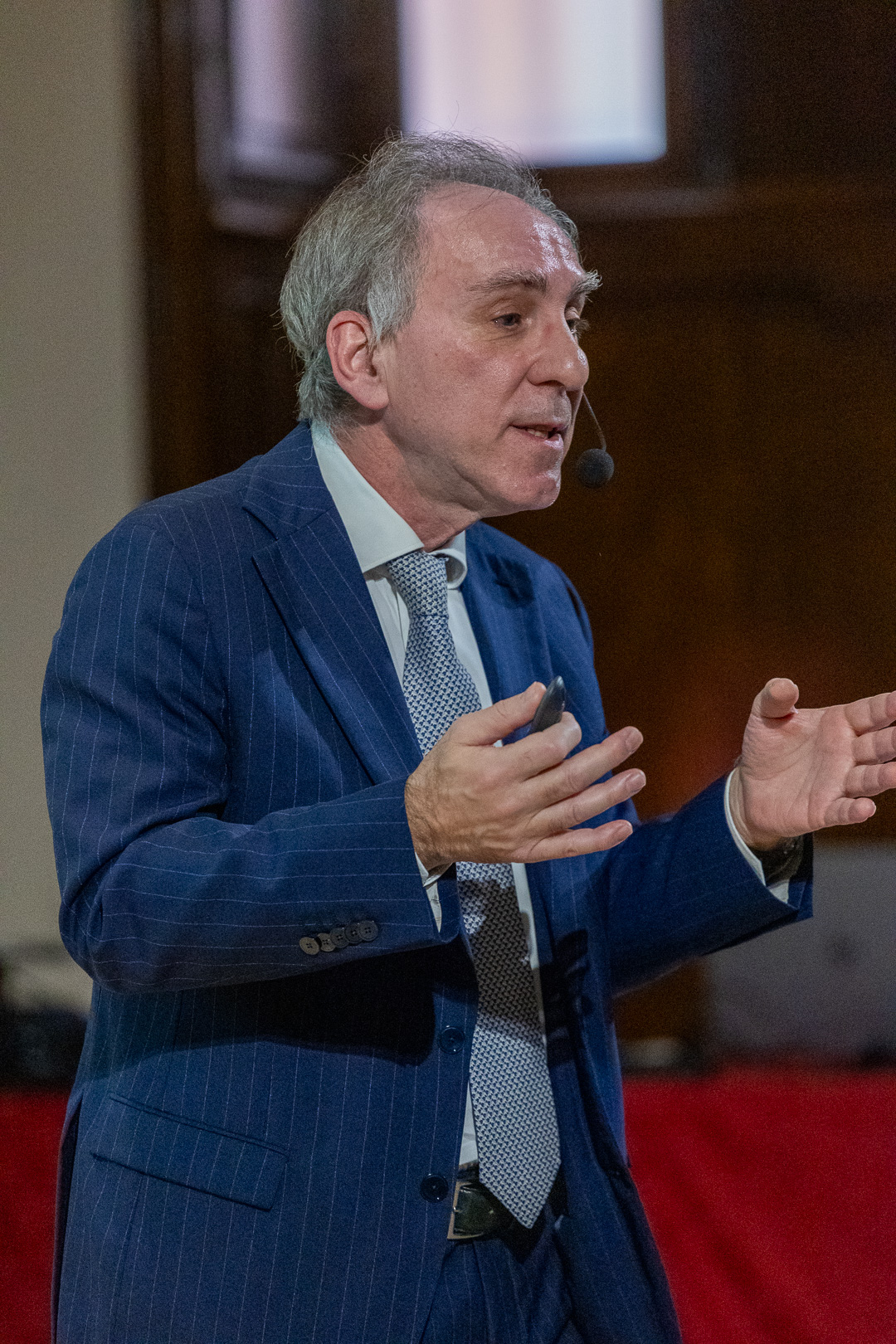
“Maintaining this indicator is important,” explained Claudio Teodori, Professor at the University of Brescia, during his presentation. “Given the international geopolitical and economic environment, it is a key factor in preserving competitiveness.”
A similar trend was recorded for EBITDA, which remained at 7% of turnover, unchanged from 2024. “This is a relatively low figure in itself, reflecting the sector's limited ability to generate cash flows,” the professor explained.
The impact of financial expenses improved, falling to 1% of turnover, thanks to a slight reduction in borrowing costs. This helped boost net profit and its share of sales, which reached 2%. In other words, for every €100 of turnover generated in 2025, companies earned €2 in net profit, half the amount recorded at the beginning of the three-year period.
“2025 presented a picture of economic stability,” Teodori added. “Conditions are expected to improve, albeit modestly, in 2026, before strengthening further in 2027. However, several critical factors could affect these forecasts, including energy prices and the availability and cost of scrap.”
INVESTMENT IN THE STEEL INDUSTRY IN 2025
In 2025, the steel companies examined in the investment analysis (a sample of 209 businesses) invested €1.83 billion, up 1.4% year on year and equivalent to 4% of revenues.
Investment in capacity expansion and business growth remained limited compared with spending on renewal and modernisation, which increased significantly. This was mainly due to the challenging international environment, uncertainty surrounding support measures and EU policies.
Investment was primarily directed towards new technologies, innovation and production process automation, while expenditure on employee training remained limited.
Plant and machinery accounted for the largest share of investment (45.9% of the sample total), followed by fixed assets (33.6%), which declined slightly compared with 2024 as some projects launched in previous financial years were completed.
FUTURE EXPECTATIONS: THE SIDERWEB SURVEY
The outlook for the Italian steel industry in 2026 remains mixed. According to the survey conducted by siderweb, the largest share of companies expects an improvement, although concerns about a further decline in turnover and financial performance remain relatively widespread.
2026 can therefore be seen as a year of recovery for certain financial indicators, with further improvement expected in 2027, when most companies anticipate either growth or stability.
The survey sample consists of 26% steel producers, 22% service centres, 24% steel distributors, 6% scrap and ferroalloy traders, 9% companies specialising in sheet metal cutting and processing, and 13% other businesses.
For 2026, 43.5% of companies expect turnover to increase, while 22% anticipate stability. Looking ahead to 2027, these shares rise to 45.7% and 41.3%, respectively.
Meanwhile, 48% of companies expect an improvement in their EBITDA margin. This proportion remains unchanged for 2027.
As for net profit, 43.5% of respondents expect an increase in 2026, rising to 45.7% for 2027.
Turning to raw materials and energy, positions on scrap exports have hardened compared with 2025. 46% of companies would support a complete ban on scrap exports, while a further 17% would favour such a measure only on a temporary basis. The remaining 37% oppose a ban, mainly because it would restrict companies' freedom to make their own economic decisions.
Energy remains a top priority for Italian steel companies. 52% of respondents believe nuclear energy should be reconsidered, while 37% support exploring investment in small-scale reactors dedicated exclusively to industrial use, serving limited and geographically homogeneous areas, as a way of shortening implementation times.
Regarding energy consumption, almost one in three companies obtains more than 30% of its energy from renewable sources, while 28% report a share between 10% and 30%. By contrast, renewable energy accounts for less than 5% of consumption at 20% of companies.

